



Discover how your bloodwork and Metabolic Balance® create a nutrition plan that supports metabolic health and sustainable weight loss.
Bloodwork is one of the most powerful tools when it comes to personalized nutrition. It is also the heart of the Metabolic Balance® program.
When lab values are interpreted through a nutritional and functional lens, they can reveal imbalances long before a diagnosis is made. More importantly they can help guide your food choices that will ultimately support your metabolism, energy and ability to maintain a healthy weight.
In other words, your bloodwork already holds the clues.
What “Personalized Nutrition” Really Means
Personalized nutrition simply means that your food plan is built around your own unique biology. Not fads, trends or generic guidelines.
However, many people are used to hearing from their doctor that “your bloodwork looks fine” even while feeling tired, bloated or stuck at their weight. This is because blodwork is viewed in a diagnostic lens, and checking if the numbers fall within a “normal” range.
When bloodwork and personalized nutrition are brought together, those numbers can start telling a story.
In fact, blood biomarkers can reveal:
- Nutrient deficiencies
- Inflammation
- Metabolic stress
- Organ strain.
This allows nutrition to be targeted instead of a one-size-fits-all approach. 1,2
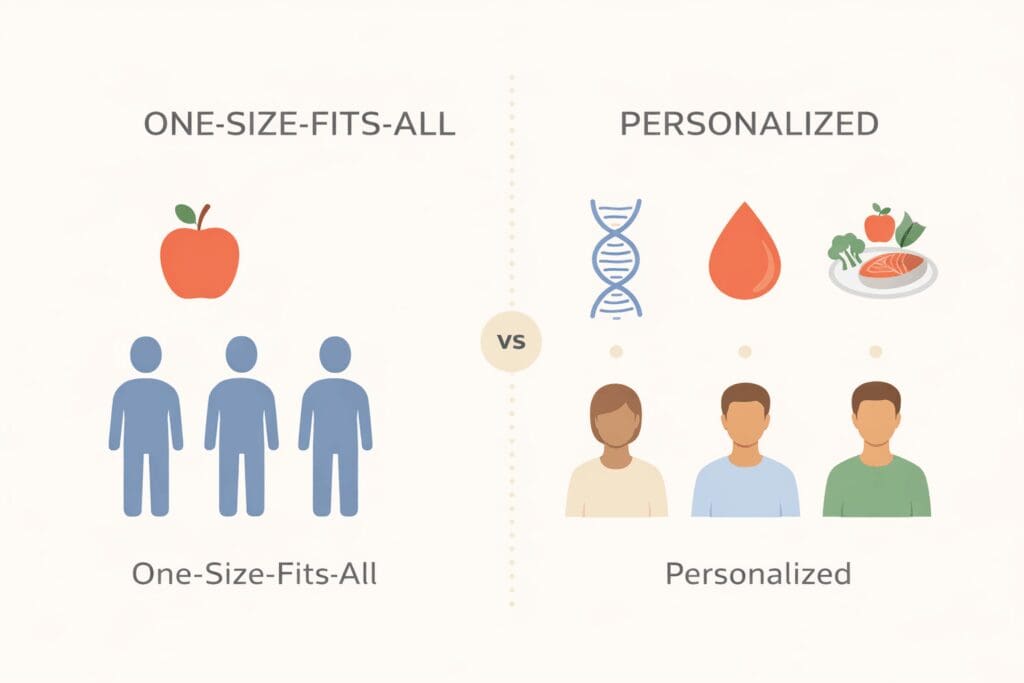
Metabolic Balance® is one program that uses 36 different blood values, plus your health history and food preferences to create a nutrition plan just for you.
Research also shows that combing clinical medicine with personalized nutrition therapy based on blood work can actually improve chronic symptoms and even support “pre-disease” states before they progress further.3
How Bloodwork Guides your Food Plan
Think of your blood test results as a metabolic dashboard.
Each marker gives insight into how your body is functioning and what you may need more or less of.
This dashboard can show:
Blood Cells and Energy
Red blood cell biomarkers (such as RBC, MCV, MCH and hematocrit) can point out imbalances in iron, vitamin B12, folate, copper, and vitamin B.
These nutrients directly impact:
- How your body transports oxygen
- Energy Production
- Brain function
- Cardiovascular risk1,2
This is why fatigue or brain fog can exist even when the values fall within “normal” levels.
Protein status
Biomarkers such as Total Protein and Creatinine can provide insight into muscle mass, protein absorption and overall metabolic health.
Low creatinine levels, for example, may suggest muscle loss or inadequate protein intake long before it shows on the scale.3

Organ Function
Kidney and liver biomarkers tell us how well your body is at:
- Detoxing
- Processing Fats
- Eliminating Waste
These directly shape your metabolism and helps guide decisions around fat and protein intake.3
Inflammation and Cardiometabolic Risk
Biomarkers such as triglycerides, cholesterol and inflammatory proteins can help assess your cardiometabolic risk and guide carbohydrate and fat intake.
A review of multiple studies found that personalized nutrition showed promise in improving blood sugar control and reducing carbohydrate intake, especially benefiting people with diabetes and pre-diabetes.4
This shows that no crystal ball is required. Your blood work already holds the insights needed.
Medications as Nutrient Stealers
Something many people are not told is that some medications can actually “steal” or deplete your nutrients.
For instance, statins that are commonly used to lower cholesterol, block the pathway your body uses to make coenzyme Q10 and vitamin D. Over time, this can impact your muscle, energy, immune system and overall well-being.3
Other common drugs for blood pressure, pain and mood can also increase the need for specific vitamins, minerals or fatty acids.
Bloodwork allows to identify what nutrients your body needs to work more effectively.
What Working with a Metabolic Balance Coach Looks Like
Clients often appreciate knowing that their plan is grounded in science, and that it is not a generic meal plan paired with a quick “good luck.”
A typical Metabolic Balance® program often involves:
- A comprehensive intake, including health history, medication, food preferences and goals
- A personalized nutritional plan that is based on your unique profile
- Health coaching to help you troubleshoot, adapt and integrate the plan into your daily life
Through clearly defined phases, including a 16-day metabolic reset period, clients often start noticing changes in how they feel, how their body responds to food and the numbers on the scale.

Final Thoughts
You bloodwork is a roadmap.
When interpreted through a personalized nutritional lens, it can help you stop guessing and instead, start understanding what your body actually needs.
If you are curious about what your bloodwork may be telling you, I would be happy to explore that with you.
References
1 Picó, C., Serra, F., Rodríquez, A.M., et al. 2019. Biomarkers of Nutrition and Health: New Tools for New Approaches. Nutrients, 11(5), 1092. DOI: https://doi.org/10.3390/nu11051092
2 Pokushalov, E., Ponomarenko, A., Shrainer, E., et al. 2024. Biomarker-Guided Dietary Supplementation: A Narrative Review of Precision in Personalized Nutrition. Nutrients, 16(23), 4033. DOI: https://doi.org/10.3390/nu16234033
3 Arakaki, M., Li., L., Kaneko, T., et al. 2021. Personalized Nutritional Therapy Based on Blood Data Analysis for Malaise Patients. Nutrients, 13(10), 3641. DOI: https://doi.org/10.3390/nu13103641
4 Munawaroh, E.F., Herawati, D.M.D., Megawati, G., et al. 2025. Effectiveness of Personalized Nutrition on Management Diabetes Mellitus Type 2 and Prediabetes in Adults: A Systematic Review. Diabetes Metab Syndr. Obes. 9(18), 2783-2796. DOI: https://doi.org/10.2147/DMSO.S528619
5 Larsen, T., Dalskov, S-M., van Baak, M., et al. 2010. Diets with High or Low Protein Contnt and Glycemic Index for Weight-Loss Maintenance. N. Engl. J. Med. 363(22), 2102-2113. DOI: https://doi.org/10.1056/nejmoa1007137


View comments
+ Leave a comment